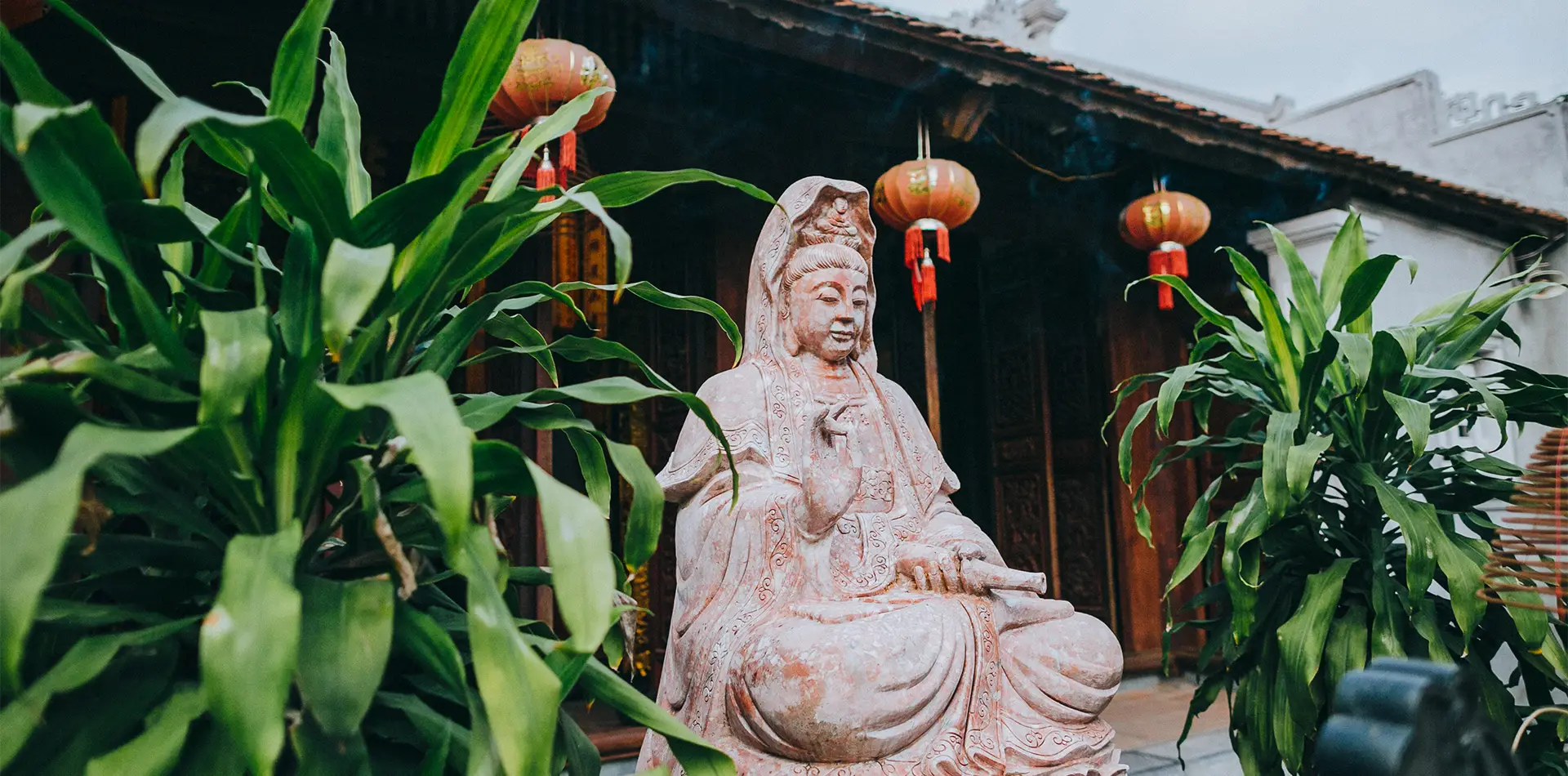
In our house we have about six statues of Quan Yin, the Buddhist goddess of love and compassion, placed in different rooms. She symbolizes purity and is beautiful to look at. One statue is made of wood, several are carved from stone, and one is made of jade. Near my computer, I keep a rose quartz statue of an angel. I also have an angel statue in my garden overlooking the yard, which I see when I get up each morning. All of these statues remind me of what can be, a world filled with love and peace.
Many churches also use statues, often depicting Jesus on the cross. For me, this can feel like a mixing of death with resurrection or other themes. In Islam, however, statues are not used. This tradition is often traced back to the story of Moses and the Ten Commandments, when he called on his people to worship one God rather than idols. Throughout history, many cultures worshiped different deities, such as the Olympian gods of Greece, led by Zeus, or other ancient divine figures worshiped across early civilizations.
What Is Wrong With Using Idols?
So what is wrong with using idols, especially if they remind you of an important event or a meaningful philosophy? In my opinion, nothing. I have Buddhist statues throughout my house and enjoy seeing the smiling face of Buddha, representing peace and contentment. In my office, I have a “moving Buddha” that I bought from an angel shop in Hilo. As you walk around the room, the statue appears to follow you, which surprises many of my clients. People often wear symbols around their necks or on their hands to remind them of what they value.
The Role of Symbols in Spiritual Life
When developing an altar, statues or other symbolic objects can be important. They might represent a god, a spiritual guide, or simply a reminder of the natural world. On our altar we also use a Native American drum and a rattle. Human beings naturally look for figures or symbols to honor, whether they represent spiritual beliefs, leaders, or people who inspire us. Because of this, belief systems should not necessarily suppress symbols; they can instead encourage thoughtful use of them.
As I sit at my breakfast table, I see small statues of a monk and Quan Yin beside my computer. They remind me of the symbol of Yin and Yang, the circle with two opposing but balanced forces within it. According to tradition, this symbol developed from early Chinese observations of shadows over time, representing the balance of light and dark. Chinese culture has long used symbols such as dragons and sacred patterns in temples and art. Life would be very different if we did not have symbols to remind us of important ideas.
Symbols Are Already Part of Everyday Life
We rely on symbols every day, stop signs, traffic lights, and many other signs that help create order when we drive. Why not also bring that sense of order and meaning into your spiritual life by keeping symbols or idols that remind you of the wonder of life? At its heart, this is about remembrance and reverence.
Sacred Geometry and the Language of Pattern
In our beliefs, we also use sacred geometry, much like what appears in Islamic art and ancient Egyptian designs. These patterns and symbols can help focus the mind and bring a sense of harmony.
This reflection is simply something to think about. Symbols and idols can help align your energy, which, in many ways, is the purpose of spirituality.