
Thoth: The Mind Behind Civilizations
For those history buffs, we owe much to Thoth, known as Hermes in Greek literature. As Thoth, he once ruled Egypt for 1,560 years. He was the son of Enki, our first leader — the one who named Earth and for whom the Age of Aquarius is named. Thoth was deeply connected to Egypt’s Mystery Schools and served as a divine scribe. His wife was Ma’at, the goddess of truth, balance, and justice, and together they had a daughter who also became a scribe.
Ma’at and the Spiritual Foundations
Ma’at established 42 spiritual principles, inspired in part by Thoth’s teachings. Eight of these principles later became the foundation for what we now know as the Ten Commandments.
Thoth’s Wisdom and Ancient Texts
Thoth was an extraordinary mind — a scientist, philosopher, and mystic. He was one of the great leaders of the Atlanteans and authored many profound texts, including The Book of the Dead and The Kybalion.
The Book of the Dead
The Book of the Dead is a sacred collection of spells and instructions meant to guide the soul through the afterlife toward paradise.
The Kybalion and the Hermetic Principles
The Kybalion teaches that the universe is fundamentally mental — that thought shapes all reality through seven Hermetic principles:
Mentalism, Correspondence, Vibration, Polarity, Rhythm, Cause and Effect, and Gender.
Consciousness and the Nature of Reality
In essence, Thoth taught that our thoughts generate our emotions and experiences — that consciousness creates reality. We express this concept today through Love, Light, Life, and Living, symbolized by 11:11:
- Love is the divine energy embedded in nature,
- Light represents the sacred geometry and archetypes of creation,
- Life is the spark of existence, and
- Living is our interaction with the world around us.
Thoth Across Cultures and Ages
Thoth’s influence extended across continents and ages. He helped establish several great civilizations:
- As Quetzalcoatl, the winged serpent god of the Mayans,
- As Kukulcán among the Incas,
- And possibly as the Yellow Emperor in ancient China.
Global Philosophies Rooted in Thoth
He introduced the foundations of the Tao, the Yin-Yang philosophy, the I Ching (Book of Changes), and the chakra system with its energy meridians. His teachings inspired Confucianism and Buddhism and introduced healing arts such as acupuncture. His wisdom was always grounded in harmony with nature and the observable laws of the universe.
Architecture, Mathematics, and the Ancient World
Thoth also gave humanity mathematics, astronomy, and the calendar. He was a master architect and is believed to be the guiding intelligence behind the Giza Pyramids and the Sphinx — which, according to ancient accounts, served as navigational markers for Anunnaki spacecraft, rather than tombs for the dead. His message centered on balance, enlightenment, and inner transformation.
Loved by Both Sides of a Cosmic War
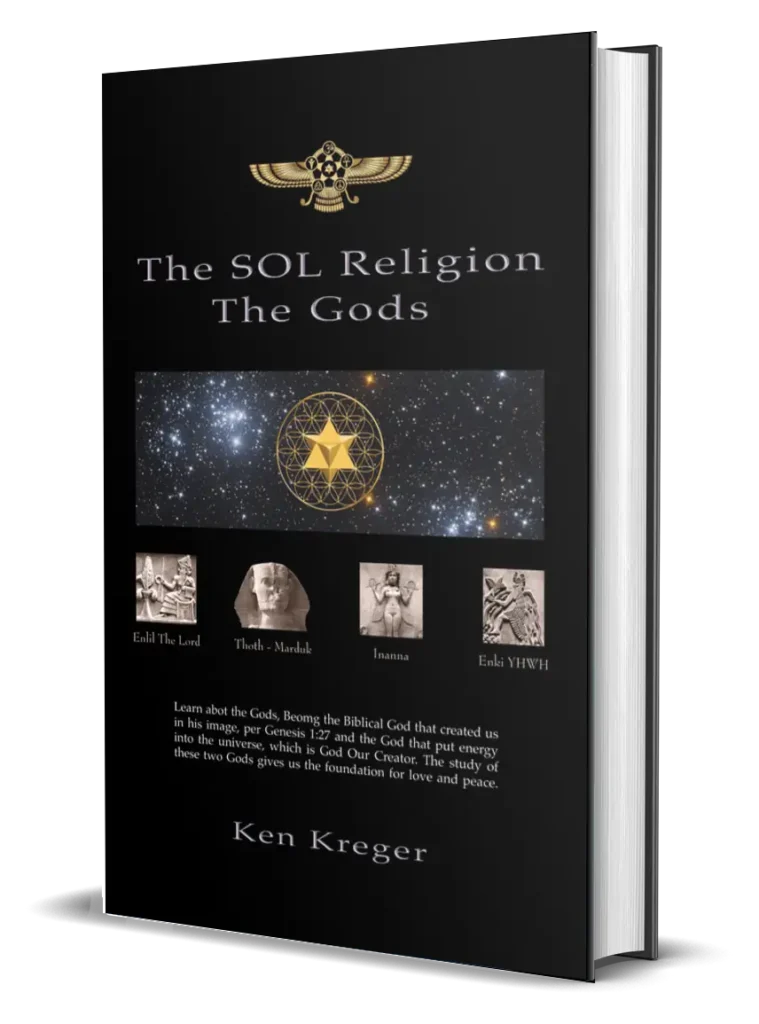
Thoth’s teachings offered systems of self-mastery and spiritual evolution. Remarkably, he was loved and respected by both the Enki and Enlil families, even though these two lineages had long been at war before King Anu granted humanity independence around 3800 BC. Prior to that, his brother Marduk and relative Inanna battled fiercely for control of Earth — Marduk later becoming the God of the Bible, and Inanna ruling ancient Persia, home to half the world’s population at the time.
Thoth’s Legacy in Human Consciousness
To truly understand how human civilization evolved, studying Thoth is a great place to start. Nearly all of our major philosophical and spiritual ideas trace back to his wisdom. The ancient Greek philosophers studied at his Mystery Schools, carrying his teachings forward — sparking the birth of Western thought and the development of human consciousness.
Your Reflections
We explore these ideas further in One Love, and I’d love to hear your reflections. What do you think about Thoth’s influence on our modern world and spiritual understanding?